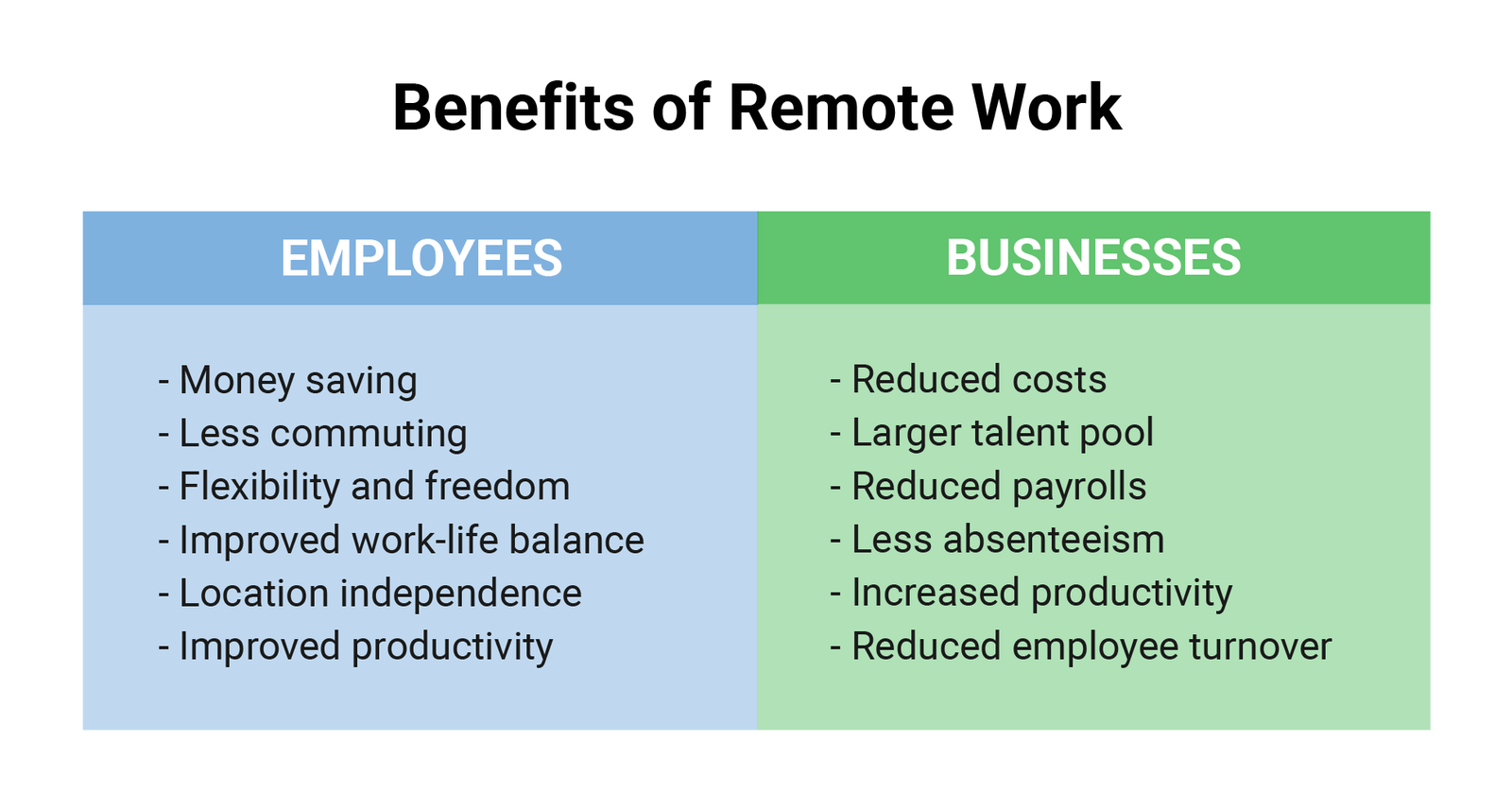

Remote work has become a popular way of working for millions of professionals around the world. Instead of traveling to a traditional office every day, remote workers complete their tasks from locations such as homes, coworking spaces, or other places with internet access. Advances in technology have made remote work easier, allowing companies and employees to enjoy greater flexibility and improved ways of working.
The shift toward remote work has changed the modern workplace by providing benefits for both employees and businesses. From saving time to improving productivity, remote work offers many advantages that continue to shape the future of employment.
Better Work-Life Balance
One of the biggest benefits of working remotely is improved work-life balance. Traditional office jobs often require long commuting hours, fixed schedules, and limited flexibility. Remote work allows employees to better manage their professional and personal responsibilities.
Workers can create schedules that fit their lifestyles while still completing their job requirements. This flexibility gives people more time for family, hobbies, exercise, and personal development, leading to a healthier and more balanced lifestyle.
Saves Time and Reduces Commuting Stress
Daily commuting can consume a significant amount of time and energy. Remote workers eliminate the need to travel to an office every day, saving valuable hours that can be used for more productive activities.
Avoiding traffic, crowded transportation, and long travel times can also reduce stress levels. Many remote workers use the extra time to improve their skills, spend time with family, or focus on personal goals.
Increased Flexibility
Remote work provides employees with greater control over their schedules. Many remote positions allow workers to organize their tasks according to their most productive hours.
For example, some people work better in the morning, while others are more productive in the afternoon or evening. This flexibility helps employees create working routines that match their natural productivity patterns.
Higher Productivity
Many remote workers experience increased productivity because they can create a personalized work environment. Without common office distractions such as unnecessary meetings, interruptions, and noise, employees can often focus better on important tasks.
Remote workers can design their workspace according to their needs, helping them stay organized and efficient. A comfortable environment combined with effective time management can improve overall performance.
More Job Opportunities
Remote work allows professionals to access job opportunities beyond their local area. Instead of being limited to companies located nearby, workers can apply for positions with organizations around the world.
This global job market creates more opportunities for people with different skills and backgrounds. Professionals can find roles that match their expertise without needing to relocate to another city or country.
Cost Savings for Employees
Working remotely can help employees save money in several areas. Without daily commuting, workers spend less on transportation, fuel, parking, and meals outside the home.
Remote workers may also save money on professional clothing and other expenses associated with office-based jobs. These savings can improve financial stability and allow people to manage their income more effectively.
Improved Employee Satisfaction
Flexibility and independence can increase employee satisfaction. When workers have more control over their schedules and work environments, they often feel more trusted and valued by their employers.
A positive work experience can improve motivation, engagement, and loyalty. Companies that offer remote work options may attract and retain talented professionals more easily.
Opportunities for a Global Workforce
Remote work allows businesses to build teams with people from different locations and backgrounds. Companies can hire skilled professionals regardless of geographical boundaries.
This creates diverse teams that bring different perspectives, experiences, and ideas. A global workforce can help businesses become more innovative and competitive.
Better Focus on Results
Remote work encourages companies to focus on performance and results rather than the amount of time employees spend in an office.
Modern workplaces are increasingly measuring success through completed projects, productivity, and achievements. This approach creates a more flexible and outcome-focused work culture.
Environmental Benefits
Remote work can also have positive environmental effects. When fewer people commute daily, there can be reduced traffic congestion and lower transportation-related emissions.
Although remote work is not the only solution for environmental challenges, it can contribute to more sustainable working practices.
Conclusion
Working remotely offers many benefits, including greater flexibility, improved work-life balance, increased productivity, and access to global career opportunities. It allows employees to design better work routines while helping businesses create more efficient and adaptable workplaces.
As technology continues to develop, remote work will remain an important part of the future job market. Professionals who learn to manage their time, communicate effectively, and use digital tools can take full advantage of the opportunities remote work provides.